Why More Network Bars Don’t Always Mean Faster Internet
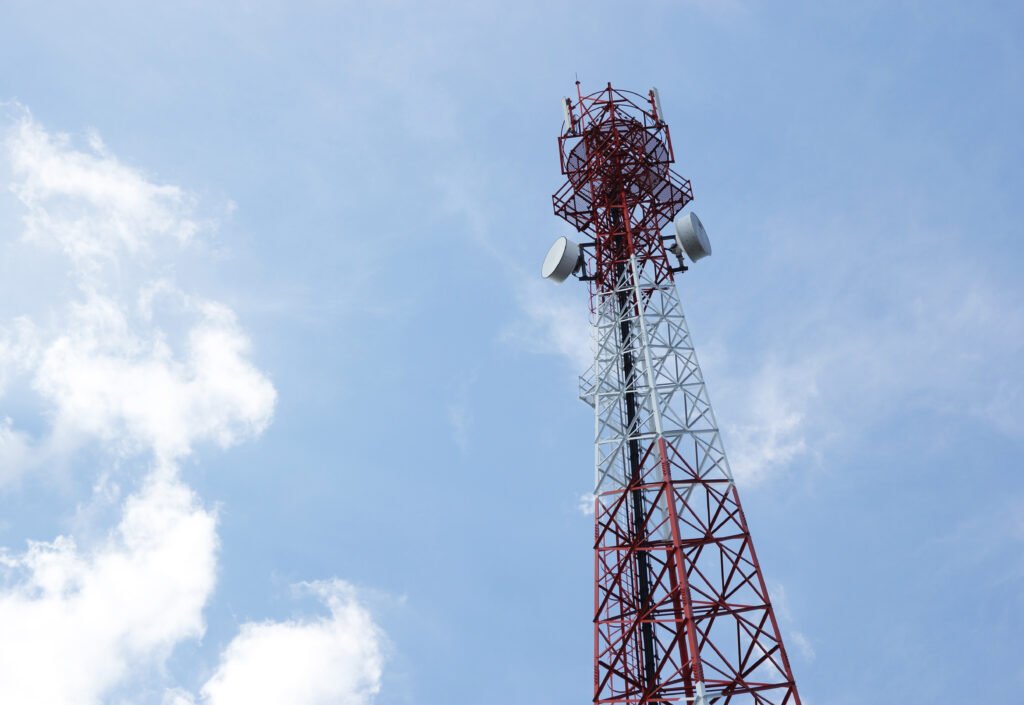
The “Bars” Are Just a Measurement of Volume
Think of signal bars as a measure of how loudly the cell tower is shouting at your phone. A full signal means the “voice” of the tower is crystal clear. When the connection is that strong, your phone can use complex “modulation”, basically a high-speed digital shorthand, to pack more data into every second.
However, hearing someone clearly doesn’t mean they have something useful to tell you. Actual browsing speed depends on far more than just how loud the signal is.
When the “Highway” Gets Too Crowded
The most common reason for a slow connection with full bars is simple: congestion. Even if the radio link to your phone is perfect, the physical infrastructure at the tower has limits.
Every tower is connected to the wider internet by “back-haul” links, usually fiber optic cables or microwave dishes. If you are at a crowded event or a busy campus, thousands of people might be trying to squeeze through that same digital pipe at once. In this scenario, the network becomes saturated. It doesn’t matter how many bars you have; you’re effectively stuck in a digital traffic jam where everyone is slowed down equally.
Why Your Phone Might “Lie” to You
Sometimes, you might notice your phone dropping a bar or two, only for your internet speed to suddenly increase. This isn’t a mistake.
As you move around, your phone constantly scans for the best available connection. It might decide to “hand over” your session to a different tower. While the new tower might be further away (showing fewer bars), it might also be nearly empty. A three-bar signal on an idle tower will almost always provide a snappier experience than a five-bar signal on a tower that is struggling to manage a massive crowd.
The Adaptive Nature of 5G and LTE
Modern networks are incredibly flexible. They are designed to adapt their coding schemes in real-time based on the environment.
In ideal conditions, A strong signal allows for the most efficient data transfer possible.
In poor conditions: If you move behind a concrete wall, your phone and the tower switch to a simpler, slower way of communicating to ensure the message still gets through.
This adaptation happens hundreds of times a second. But again, these “ideal conditions” only refer to the radio waves themselves. They don’t account for how busy the carrier’s servers are or how they are prioritizing resources among different users at that exact moment.
The Verdict
The bars on your phone tell you about radio link quality, not network capacity. A full signal gives you the potential for high speeds, but it isn’t a guarantee. Real-world performance is a balancing act between the radio signal, the number of people sharing the tower, and the capacity of the cables buried underground.
Next time you’re staring at a “full” signal that won’t load a video, just remember: the tower can hear you perfectly; it’s just too busy talking to everyone else to answer you😒